A Conversation That Never Happened: FRANTIŠEK DRTIKOL and C.G. JUNG on Light, Shadow, and the Path to the Self
Miroslav Dostál
Dialogue
Dec 16, 2025
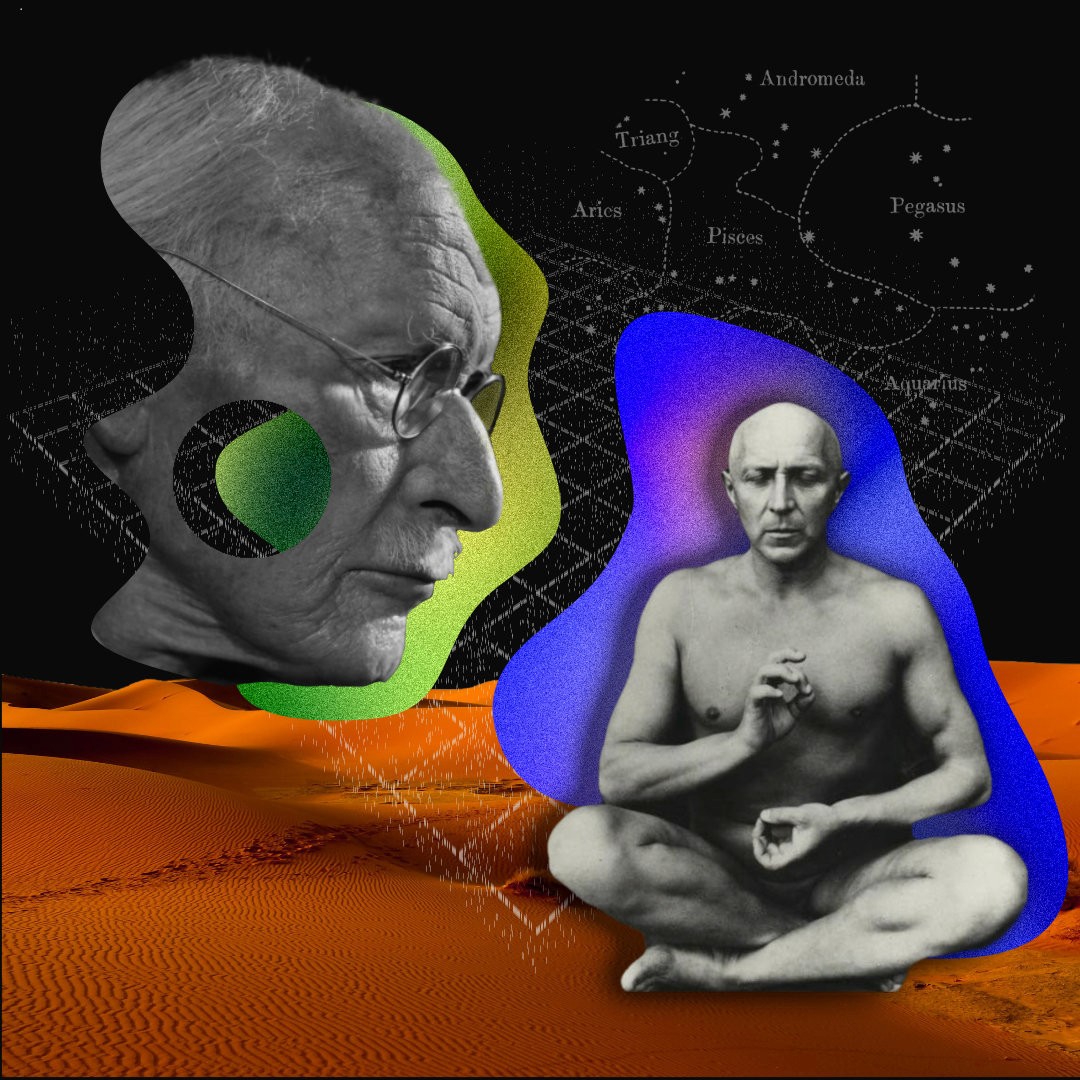
JUNG is examining the images and paintings that DRTIKOL shows him.
JUNG: Your photographs fascinate me, MASTER. Light and shadow in perfect balance. As if the body were only a symbol of something deeper.
DRTIKOL: The body is a symbol, DOCTOR. When I photograph the nude body, I’m not photographing flesh. I’m photographing energy, the flow of life that the Western eye doesn’t see.
JUNG: An archetypal image. Your women are not particular individuals — they are emanations of the collective unconscious. The ANIMA — the inner feminine principle that every man carries within. I first recognized it in 1913 when I nearly collapsed. I saw her — in visions, in dreams. It nearly cost me my mind.
DRTIKOL nods.
DRTIKOL: I know it. I’ve walked through darkness too. In meditation I saw things a person would rather not see. Demons. Fear. The emptiness beneath everything.
JUNG: Nekyia — the descent into the underworld. A necessary step of individuation. Without it, a person remains on the surface. I recorded it in the Red Book — but never published it. It was too… personal. Too close to the edge.
DRTIKOL: And I closed my studio. Sold everything. Left for Spořilov. Also too personal. Also on the edge.
A silence. Both know what it means — to risk everything.
JUNG: The SHADOW — what we repress. In your photographs I see how you work with it. Light cannot exist without Shadow.
DRTIKOL: Exactly. But you say — integrate the Shadow into the Light. And I say — stop believing that Light is good and Shadow is bad. Both are illusions. Reality is what lies behind them.
JUNG: Behind them is the SELF — the wholeness that contains the opposites. But you cannot reach the Self through meditation alone. You need the EGO — a structure capable of containing that wholeness. I’ve seen people lost in mysticism. Psychosis. Inflation. Fragmentation.
DRTIKOL: And I’ve seen people lost in the Ego. Endless analysis. Talking about the Self instead of experiencing it. Theory as an escape from practice.
JUNG: That is a fair critique. But the difference is this: I walked through that darkness — and then I gave it form. Archetypes, the Self, individuation — these aren’t just theories. They are maps for those who come after me.
DRTIKOL: And I walked through — and left form behind. Buddha said: My finger points to the moon. Do not look at the finger. You have created a whole system of fingers — and now people study the fingers instead of the moon.
JUNG smiles.
JUNG: Maybe you are right. Maybe I created a new dogma. But the West needs dogma — a structure that one can enter. You cannot tell a European neurotic: “Sit and be silent.” He will collapse.
DRTIKOL: And you cannot tell a meditator: “Analyze your archetypes.” That kills the experience. Each path has its place.
JUNG: Perhaps. I chose the path through form — psychology as a bridge between science and mysticism. You chose the path outside of form — direct realization.
DRTIKOL: And both are valid. You teach people how to prepare for the encounter with the Self. I teach how to receive it when it comes.
Another silence. A candle flickers.
JUNG: I wrote a commentary on the Tibetan Book of the Dead. I warned: the West cannot simply import Eastern thought. We have a different psychic structure.
DRTIKOL: I’ve read your commentary. And you are right — you cannot just import it. But you also cannot remain only in Western psychology. One must pass through. I went through Buddhist practice — yet I stayed a Czech from Spořilov. I speak things “straight out.” That is my West.
JUNG: And I went through mystical visions — yet I remained a Swiss doctor. I need categories, structure. That is my West.
DRTIKOL: So we’re both on the bridge. Just standing at opposite ends.
JUNG: Perhaps. Or we’re standing in the same place — just looking in different directions.
They both smile.
JUNG: What do you say to your students when they come with neurosis?
DRTIKOL: Nothing. We sit. We are silent. And when their Ego begins to speak — fear, desire, stories — sometimes I say: “Fuck it. Stop making new crap in your head.”
JUNG: (laughing) That’s Zen. A direct blow to the mind.
DRTIKOL: And what do you say?
JUNG: I listen. I look for patterns. Archetypes in their dreams. The Shadow in their projections. And then I show them a mirror — this is your mother. This is your father. This is your shadow. Only when they see it — can they integrate it.
DRTIKOL: Two ways. One cuts through form. The other works with form. Both are valid.
JUNG: But I fear — if a person has not walked through the darkness that you and I walked… they are in danger. Mysticism without integration becomes psychosis. Psychology without transcendence is sterile.
DRTIKOL: I agree. That’s why I tell my students: first you must know yourself. Know your anger, fear, lust. Only then can you go beyond. Without that, it’s just escape.
JUNG: That is exactly what I say. Without confronting the Shadow, the Self remains just fantasy.
They both nod.
JUNG: Master, do you think we are truly that different?
DRTIKOL: No. We both walked through darkness. We both survived it. You turned it into a map. I turned it into silence.
JUNG: And we both know — it cannot be bypassed. It cannot be intellectualized. It cannot be spiritualized. It must be walked through.
DRTIKOL: And only then — on the other side — is the light. Not as an escape from Shadow. But as its acceptance.
JUNG: Coniunctio. The union of opposites.
DRTIKOL: Nirvana and samsara are the same.
They both smile.
JUNG: Have you found it, MASTER?
DRTIKOL: If I say yes, it’s a lie. If I say no, it’s also a lie.
JUNG: I would say: I am on the path. And it never ends.
DRTIKOL: Maybe that is the same thing, DOCTOR.
Miroslav Dostál